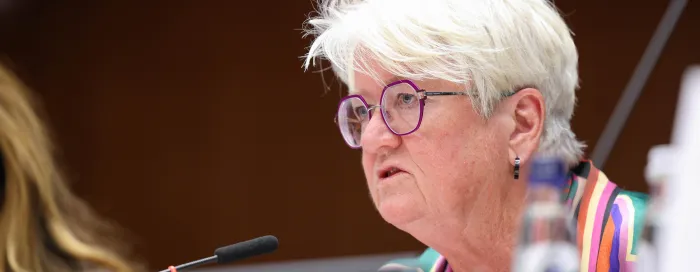
Gender equality is built where people live and work. In this interview, Carina Ohlsson, Member of the Municipal Council of Lidköping, shares her views on how cities and regions can turn the EU Gender Equality Strategy into concrete change.
How can local and regional leaders help turn the Strategy into real improvements in people's everyday lives?
The success of the new Gender Equality Strategy will ultimately be measured by whether women and girls experience real change in their everyday lives. And that is why cities and regions are indispensable. Gender equality becomes concrete locally: in schools and workplaces, in public transport, healthcare and childcare, in support for victims of violence and in opportunities to participate in political and public life. Local and regional leaders therefore have a responsibility to translate European ambitions into practical action. We can strengthen services for victims of gender-based violence, invest in prevention and education, expand affordable childcare and care services, promote equal working conditions and ensure that women are represented where decisions are made. But we also need to mainstream gender equality across all policy areas. Every decision on budgets, transport, urban planning, digitalisation or public services can affect women and men differently. The EU must therefore involve cities and regions from the beginning and provide adequate funding and tools for implementation. The Strategy gives us a common direction. Our task locally and regionally is to make sure that women can actually see and feel the difference in their daily lives.
What should be the main priorities for cities and regions over the coming years?
I see three priorities in particular. First, we must intensify the fight against gender-based violence, offline and online. Local and regional authorities are often on the front line, through schools, healthcare, social services and support for victims. We need stronger prevention, accessible support services and education that challenges harmful stereotypes and engages men and boys as part of the solution. Second, we must strengthen women’s economic independence. Women still carry a disproportionate share of paid and unpaid care work. Expanding childcare and long-term care, improving working conditions and promoting a more equal sharing of care responsibilities are therefore fundamental equality policies. Third, we must strengthen women’s participation in democracy and public life. Women remain under-represented and are disproportionately exposed to harassment and abuse, particularly online. We need mentoring, training, safer political environments and concrete measures to achieve balanced representation. But there is also an overarching priority: gender equality must become part of ordinary policymaking. It cannot be a side issue. Cities and regions should systematically assess how budgets, services and political decisions affect women and men. That is how we move from ambition to lasting structural change.
What practical measures can local and regional authorities take to strengthen women's economic empowerment and work-life balance?
One of the most practical things cities and regions can do is to make care work a shared societal responsibility rather than something that falls disproportionately on women. That starts with accessible, affordable and high-quality childcare and long-term care. When these services are unavailable or too expensive, it is still overwhelmingly women who reduce their working hours or leave the labour market. Investing in care is therefore both social policy and economic policy. As major employers, local and regional authorities can also lead by example. We can promote flexible working arrangements without creating career penalties, improve working conditions in female-dominated sectors, strengthen equal-pay policies and encourage fathers to take an equal share of parental and care responsibilities. We can also use public procurement and partnerships with local employers to promote equality and family-friendly workplaces. And we should remember that women’s economic empowerment is about more than employment. Cities and regions can support women entrepreneurs, improve access to training and reskilling, and ensure that women benefit equally from the green and digital transitions.
When women can participate in the labour market on equal terms, families gain greater security, businesses gain skills and talent, and our local and regional economies become stronger.
Image credit: © European Union / Octavian Carare